
Triple Bottom Line Investing
All companies have not only a financial return, but also a social and environmental return. Whether intentional or not, businesses make an impact on their customers, employees, the community, and the environment. Some companies create value while others extract value. The only question is whether we – as investors – are going to take these non-financial returns into consideration.
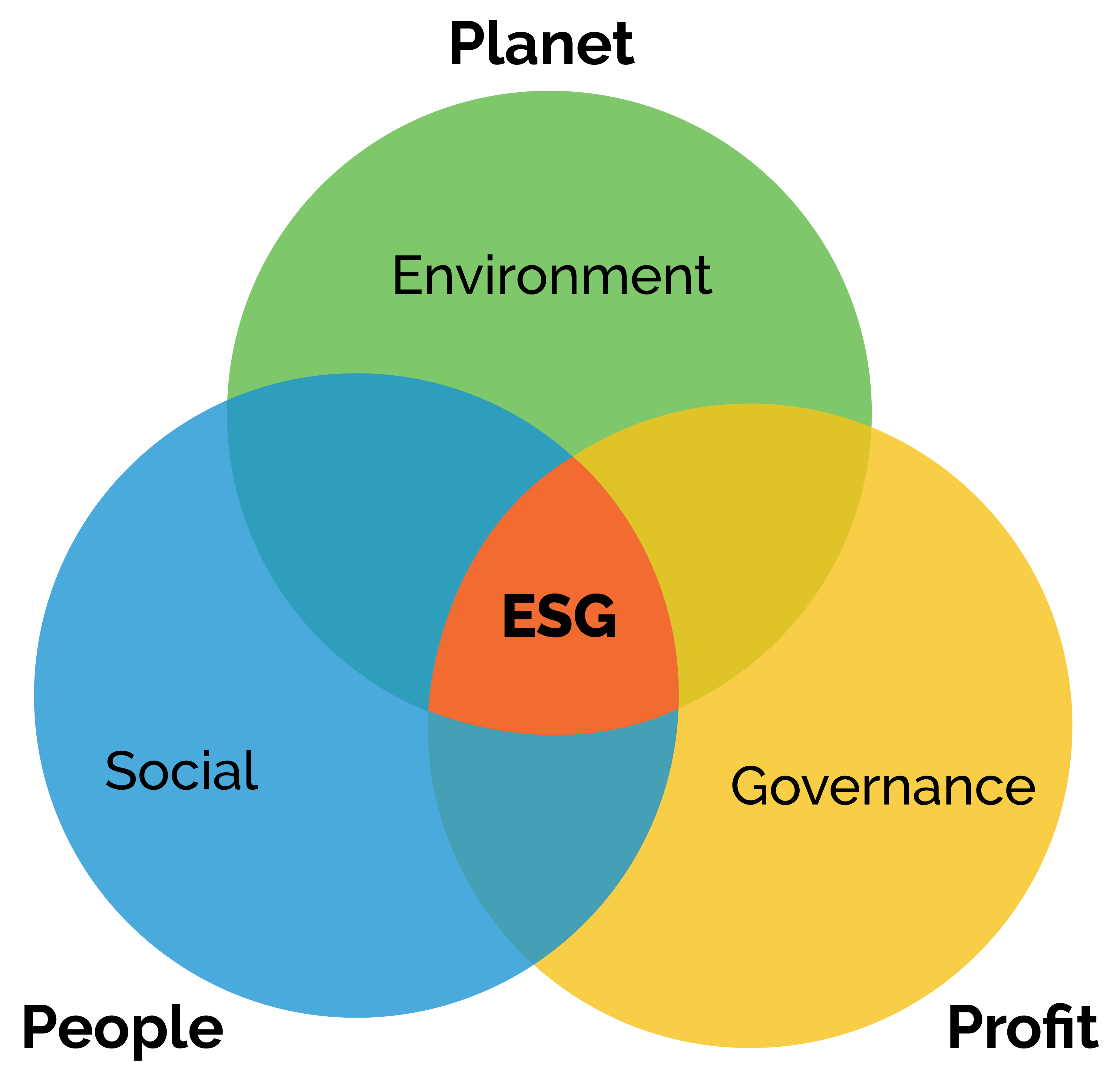
At IMPACTfolio®, our process involves what we call “triple bottom line” investing by seeking an environmental return, a social return, and a financial return. These three sources of return are what we refer to as our 3 P’s: Planet, People, and Profit.
We utilize Strategic asset allocations to manage client investment portfolios.
Our Strategic portfolios manage to a specific allocation target and rebalance periodically to ensure that the allocation remains on track. The Strategic portfolios are optimized for tax efficiency based on your specific tax situation. The graph provides a simplified example of the risk/return characteristics of our Strategic portfolios.

Sustainable Development Goals
In all of our portfolios, we invest with purpose by covering a wide spectrum of issues. We use the 17 Sustainability Goals established by the United Nations as a framework for our IMPACT investing approach. Our goal is not to focus on only one or two themes, but to seek out sustainable investing across the board in order to maximize the triple bottom line returns (planet, people, and profit).

Positive Corporate Actions
Sometimes it can be easy to look around at the problems surrounding us and start to feel hopeless or cynical. It can be tempting to wonder what difference you can really make or doubt the impact of these corporations we seek to invest in. But, in fact, there are plenty of stories of companies who are making an IMPACT.
Below there are three examples of how the specific business decisions of companies can move the needle on real positive change.

- Lam Research has joined organizations worldwide that are setting net zero goals so that, collectively, they seek to limit global warming to 1.5 degrees Celsius.
- Each year, Lam Research reports environmental performance to the Carbon Disclosure Project (CDP). In 2025, they received a score of A- for Climate Change and a score of B for Water Security.
- The company achieved more than 90% compliance in 2025 with their social and environmental expectations across their top-tier suppliers.
- In 2025, Lam Research also achieved their goal of saving over 80 million gallons of water in water-stressed regions (from a 2019 baseline).

- For the fiscal year of 2025, Microsoft matched 100% of their annual global electricity consumption with renewable energy.
- In the same fiscal year, Microsoft replenished more water globally than they withdrew.
- Across their cloud operations, Microsoft achieved 92% reuse and recycling of decommissioned servers and components for the second consecutive year and diverted 90.5% of construction and demolition waste from landfills and incinerators.
- Microsoft is committed to becoming carbon neutral by 2030 by reducing emissions across their operations and value chain and removing more carbon than they emit.

- Best Buy is committed to becoming carbon neutral by 2040.
- The company has succeeded in a 74% reduction in carbon emission (over 2009 baseline).
- 100% of Best Buy’s supply chain facilities achieved zero waste TRUE certification, achieving their goal of certifying all U.S. facilities by the end of 2025.
- They collected an estimated 144 million pounds of electronics and appliances for recycling in fiscal year 2026.
- Nearly 24% of Best Buy’s water usage decreased since 2019, surpassing their goal of reducing water usage 15% by 2025.